Vedic vs. Western Astrology: Why the Charts Differ
Have you entered the same birth date, time, and place into two birth charts, then watched a familiar sign change? It can feel unsettling when a description you've used to understand yourself suddenly comes with a different name.
A tropical Western chart and a Lahiri-sidereal Jyotisha chart can give the same planet different signs because they start measuring the zodiac from different points. The planet and birth moment stay the same. A changed sign, on its own, doesn't mean either calculation is wrong.
You can understand what changed before deciding what either interpretation means to you.
Why Is My Vedic Sign Different From My Western Sign?
The two charts may be using different zodiac settings. Both calculations shown here divide the zodiac into twelve equal signs of 30 degrees each. Applying the sidereal offset changes a planet's measured position within those signs. If the position crosses a sign boundary, its sign name changes too.
This page compares a tropical Western chart with a Lahiri-sidereal Jyotisha chart. Jyotisha is the tradition also called Vedic astrology. These are two named calculations, and neither stands for every school or technique within its tradition.
See what changes in the same moment
Choose a planet to compare its sign and degree in both zodiac frames. The gold line marks that planet on both rings. You can use the controls with a mouse, touch, or keyboard.
Sign name changes
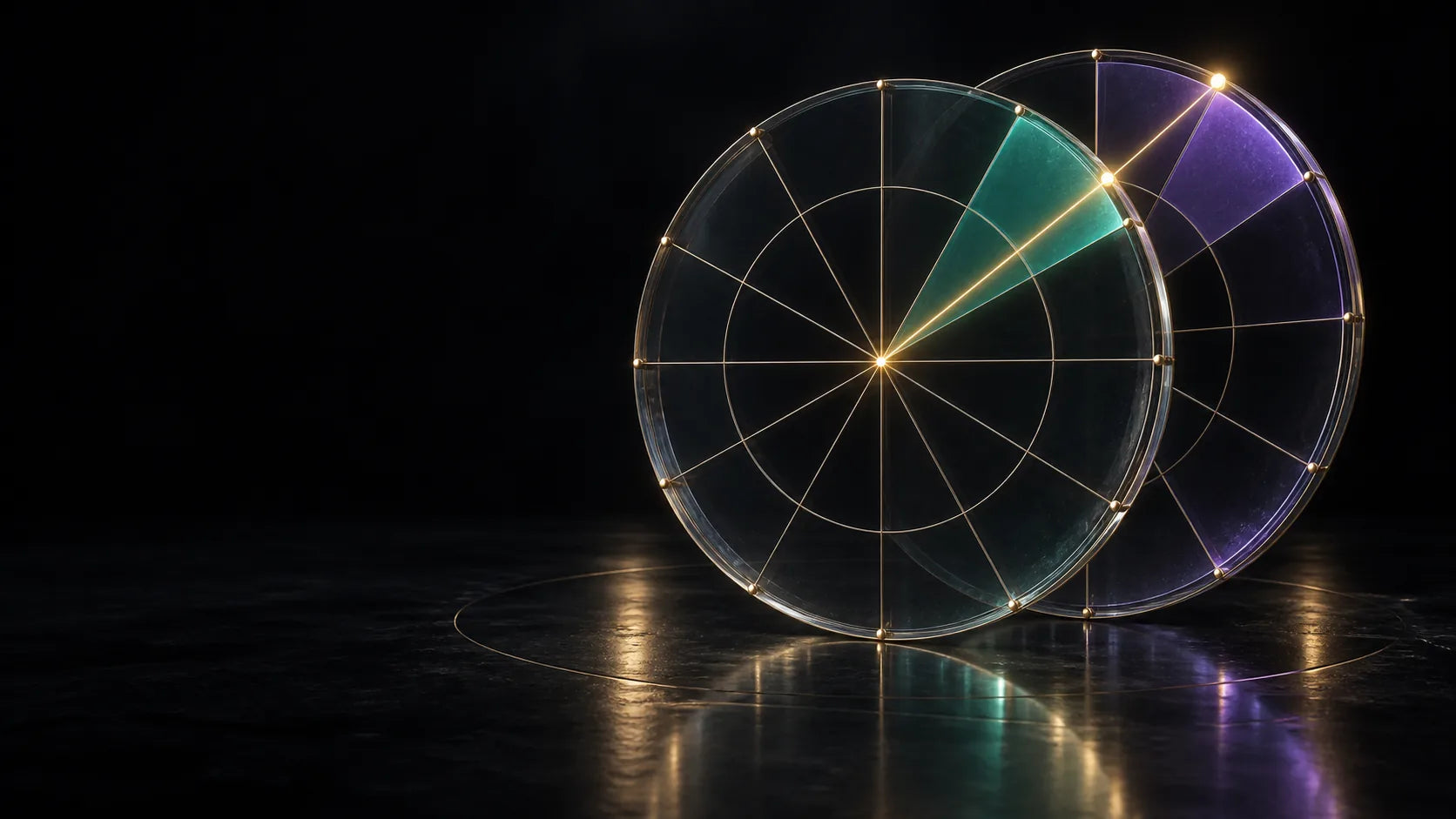
The rings use different starting points, so the same planet can receive different sign names. The gold arc shows the 23.85° gap between the starting points in this example.
Synthetic calculation example, not a personal reading. Same invented moment and seven planets in both columns: 2000-01-01 12:00:00 UTC. Both columns use the Moshier semi-analytical ephemeris through the Swiss Ephemeris engine. Tropical column: the engine's tropical default. Sidereal column: Lahiri mode. This comparison shows planetary sign positions only; houses, angles, aspects, nodes, timing methods, and interpretation are omitted so the zodiac frame remains the changing variable.
| Planet | Tropical position | Sidereal position, Lahiri | Sign name |
|---|---|---|---|
| Sun | Capricorn 10.37° | Sagittarius 16.52° | Changes |
| Moon | Scorpio 13.32° | Libra 19.47° | Changes |
| Mercury | Capricorn 1.89° | Sagittarius 8.04° | Changes |
| Venus | Sagittarius 1.57° | Scorpio 7.71° | Changes |
| Mars | Aquarius 27.96° | Aquarius 4.11° | Stays the same |
| Jupiter | Aries 25.25° | Aries 1.40° | Stays the same |
| Saturn | Taurus 10.40° | Aries 16.54° | Changes |
Five of seven signs change, and two stay the same in this one synthetic example. Every displayed degree changes. Mars and Jupiter remain within the same sign because subtracting the offset doesn't take them past that sign's beginning.
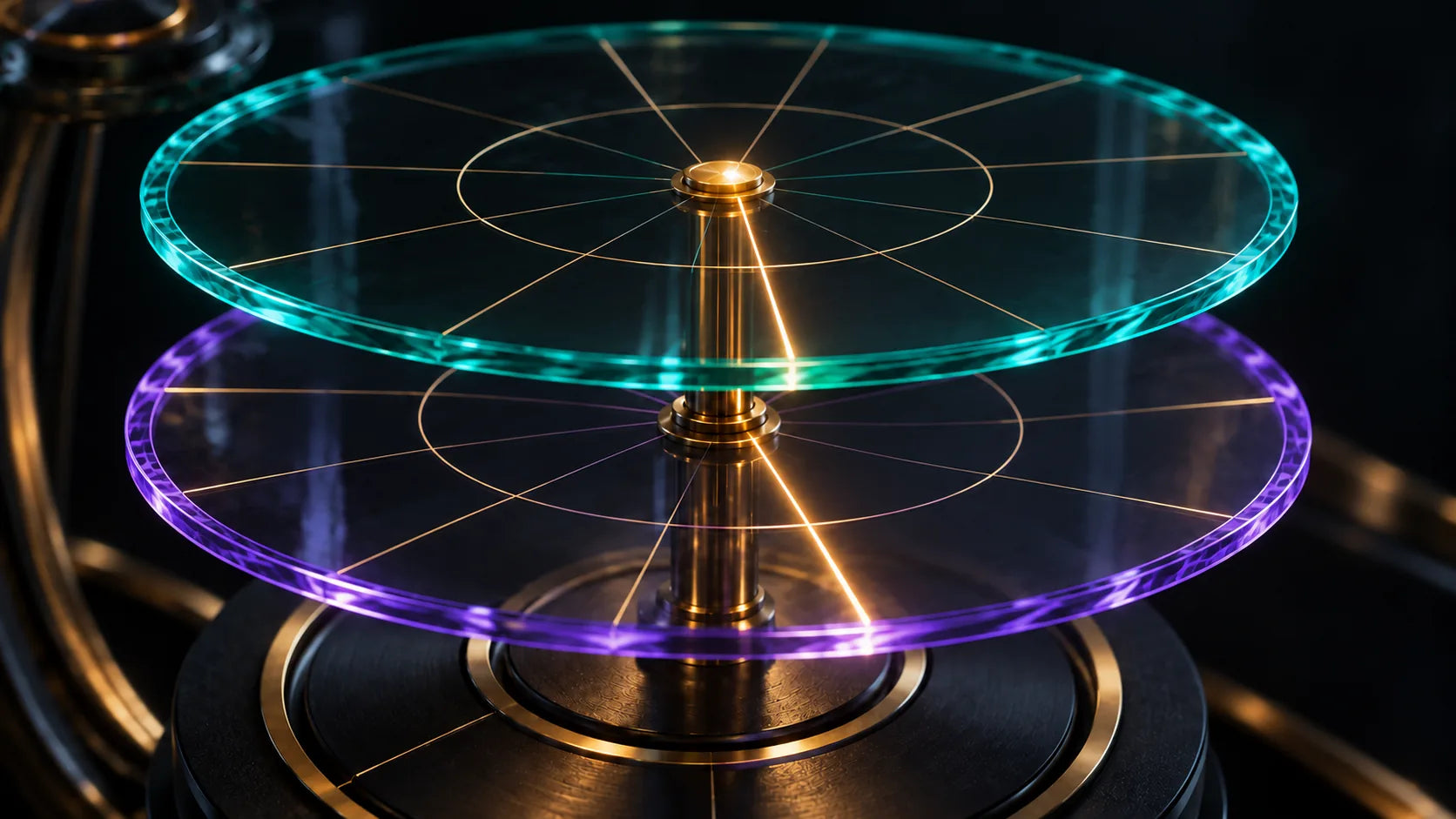
The Sun makes the difference easy to follow. Its tropical position is 10.37° into Capricorn. Subtracting the recorded offset places it at 16.52° Sagittarius in the Lahiri sidereal frame. Mars starts much later in Aquarius, at 27.96°, so its sidereal position still falls within Aquarius, at 4.11°.
This example proves calculation behavior only. It doesn't establish either tradition's empirical accuracy or interpretive validity, and the five-to-two result is specific to this moment.
Sidereal vs. Tropical Astrology: The Calculation Behind the Difference
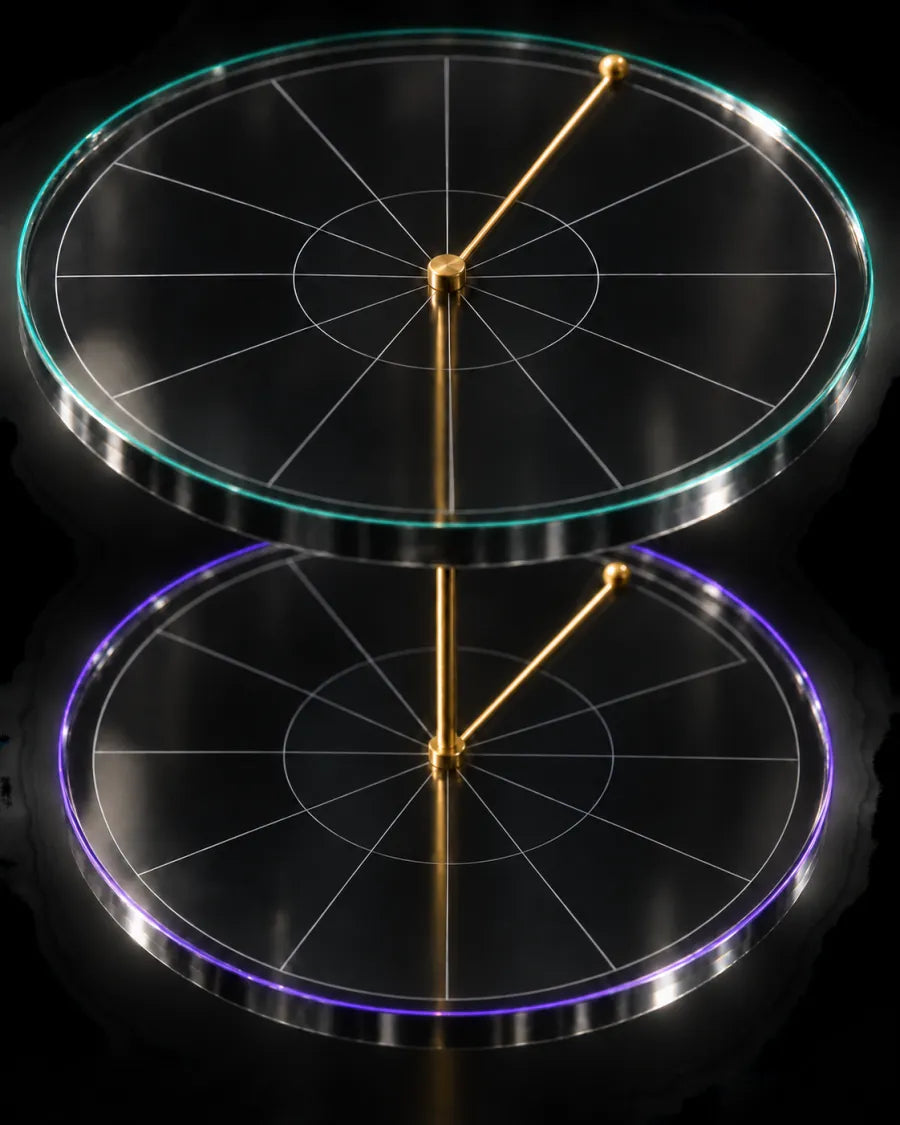
The tropical zodiac starts at the March equinox, when the Sun crosses the celestial equator northward. A sidereal zodiac uses a reference related to the stars, defined by its chosen calculation convention. Each still uses twelve equal signs in the comparison shown here. Swiss Ephemeris documentation
Earth's axis slowly changes direction. This is called axial precession, and it changes the equinox's position relative to the stars over time. That is why a zodiac tied to the equinox and a zodiac tied to a stellar reference need different starting points. The astronomy explains the coordinate difference; it does not establish what either chart says about a person. NASA's explanation of precession
What is ayanamsa?
Ayanamsa is the selected offset between the tropical and sidereal starting points for a given date. This example uses Lahiri ayanamsa. Its recorded value at this moment is 23.85° when rounded for display. Another date or ayanamsa choice can give a different offset. Lahiri is the named setting here, not a claim that it is the only correct choice. Swiss Ephemeris sidereal calculation documentation
What can differ beyond sign labels?
Changing the zodiac setting answers one calculation question. A complete comparison must also name the house system, included celestial bodies, aspects, timing methods, and interpretive rules. The house system is a separate choice from ayanamsa.
Western astrology and Jyotisha each contain multiple schools. Treating one as a personality description and the other as a prediction method leaves too much out. Before comparing two readings, check what each practitioner or app actually calculated and which techniques they used to interpret it.
Which Is More Accurate: Vedic or Western Astrology?
This example gives no basis for declaring either tradition more accurate. It shows how two declared settings produce different sign labels from the same moment. You can check whether the numbers follow those settings. That is a different question from whether an interpretation reliably describes a person or predicts an event.
Scientific support would require evidence that tests those interpretations or predictions. A reproducible planetary calculation cannot supply that evidence. Neither can a description feeling familiar, or two readings sharing a theme when they draw on the same astronomical input.

Can I use both systems?
Yes. Keep the method named beside each interpretation and compare what it says with your own experience. You can ask where a description fits, where it doesn't, and what you would need to observe before accepting it.
For example, if a reading suggests you need time before responding, you might think about a recent conversation. Did a pause help you work out what you wanted to say? Were there other times when answering immediately felt right? This is an illustrative way to examine a description, not a claim about your chart or your past.
Having a second interpretation available may give you another way to put an experience into words. You can keep a useful description, question an unhelpful one, and make your next choice with what you know about your life. Neither sign needs to become a verdict on who you are.

Read both with Gnothia
The Full Reading brings Western astrology, Vedic astrology, Human Design, and the I Ching into a written reading based on your birth information. The astrology sections give Western and Vedic interpretations their own space, so you can consider what each says before deciding whether it fits.
You might return to a passage after a difficult conversation and compare its description with what happened. That gives you something specific to question or put into your own words. Reading it beside an event you remember may make it easier to explain what felt true and what you would like to do differently.
Gnothia calculates chart information before AI writes the interpretation. AI can make mistakes. The two astrology views share astronomical inputs, and Human Design and the I Ching share a gate and hexagram structure, so agreement is not independent proof.
If you also have a Human Design chart open, see how astrology and Human Design work together before comparing what their descriptions mean to you.
See how Gnothia calculates and writes a reading. If you're new to the format, read what a soul reading is.
Questions about the comparison
No, not by itself. First compare the birth inputs and declared settings. Two calculations can follow their settings correctly and produce different signs because their zodiac starting points differ. A typo or a different time conversion can also change the result, so check those before treating a difference as an interpretation question.
Yes. A different birth time or time-zone conversion changes the moment being calculated. Birthplace is also needed for the local horizon used to calculate a rising sign and houses. Check the date, local time, birthplace, and historical time-zone handling in both charts. If the time is uncertain, keep that uncertainty visible rather than assuming an exact rising sign.
A different zodiac frame can change the rising sign label, and the result also depends on birth time and location. This example leaves the rising sign out because it compares planetary positions only. It cannot tell you which rising sign belongs in your chart.
The degree can change without crossing a sign boundary. In this example, Mars shifts from 27.96° Aquarius to 4.11° Aquarius, and Jupiter shifts from 25.25° Aries to 1.40° Aries. Their degrees change, but both remain within the same 30-degree sign.
No. The sidereal calculation shown here uses twelve equal 30-degree signs. Astronomical constellations have unequal boundaries. A sidereal sign label is therefore not the same thing as identifying which astronomical constellation contains a planet. Swiss Ephemeris documentation on defining the zodiac
Gnothia's calculation method includes a tropical Western view and a sidereal Vedic view with Lahiri ayanamsa. The Vedic view is limited and should not be read as a complete implementation of every Jyotisha technique. This page's seven-planet example isolates the zodiac difference; it doesn't reproduce the entire product. Read the calculation settings and limitations.
We used one synthetic Gregorian moment, January 1, 2000 at 12:00:00 UTC, with Julian day UT 2451545.0. Both columns use pyswisseph 2.10.3.2 with Swiss Ephemeris 2.10.03 and the Moshier semi-analytical ephemeris. The tropical column uses the engine's tropical default; the sidereal column uses Lahiri mode.
The calculation compares planetary longitude as seen from Earth's center. No birthplace is needed for this limited comparison. Swiss Ephemeris calculates the sidereal positions directly. The recorded offset, including nutation, is 23.853222486029°, shown as 23.85° here. Positions in the table are rounded to two decimal places.
Houses, angles, aspects, nodes, nakshatras, dashas, vargas, yogas, and interpretation are outside the controlled comparison. These exclusions keep the example focused on why a sign label can change. It is not a personal reading.
Sources and corrections
The Swiss Ephemeris documentation and pyswisseph sidereal-mode documentation explain the calculation tools and settings. NASA's reference-systems chapter explains axial precession. These sources support the calculation and astronomy, not the validity of an astrological interpretation.
If a displayed value or explanation appears wrong, email gnothia.app@gmail.com with this page's title, the planet or passage, and the settings or source you're comparing it with. You don't need to send personal birth information to report a problem with this synthetic example.